

Bologna - La Rossa
Famed for its good food, discover the heritage of the world renowned produce of Bologna, walk in the Apennine hills and enjoy the historic cities of Parma, Modena, Ravenna and Bologna.


Call us on 01707 817260
Or, email us at customersupport@rambleworldwide.co.uk


Call us on 01707 817260
Or, email us at customersupport@rambleworldwide.co.uk
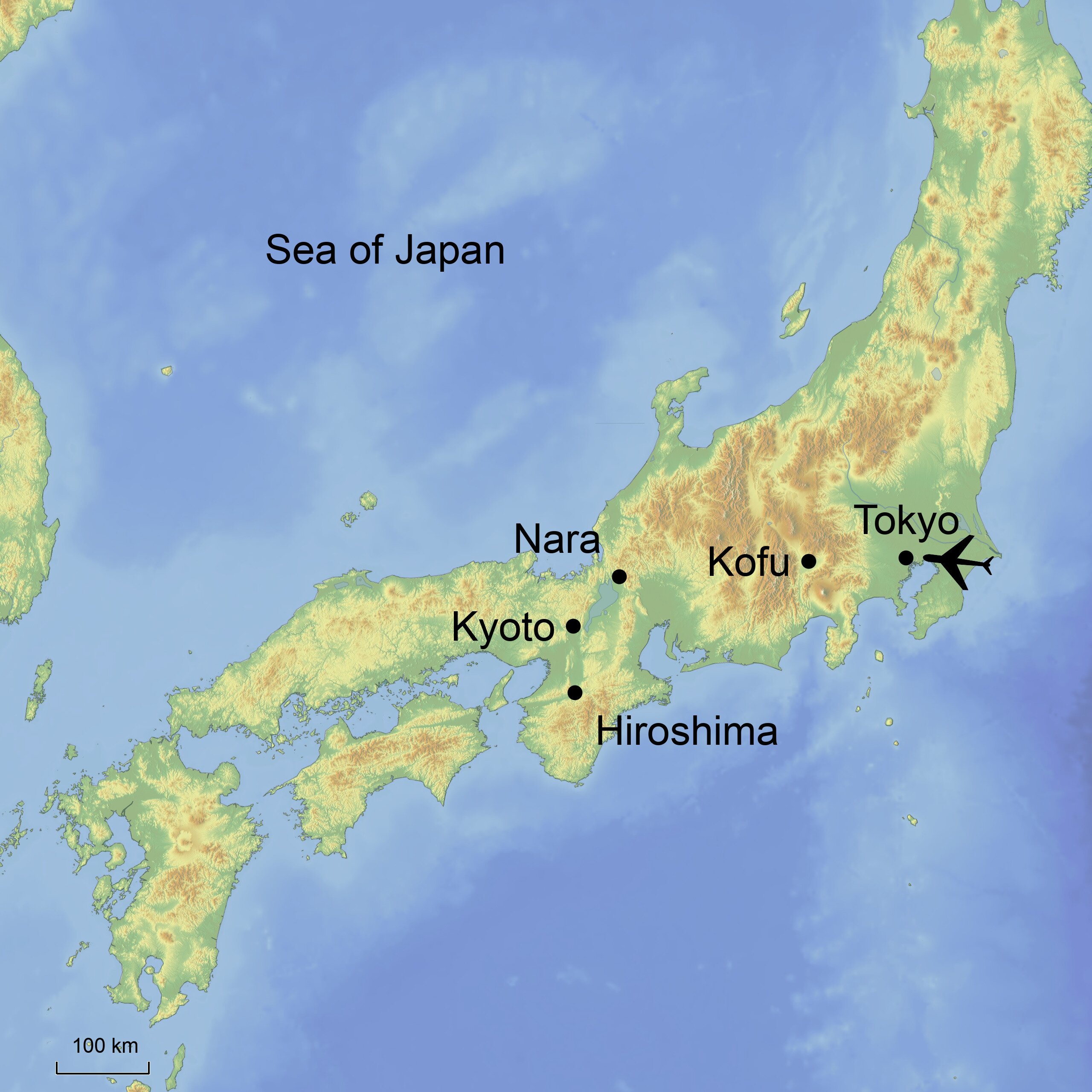
Combine an exploration of Tokyo's bright lights with a trip to Kyoto and a journey into the country's Zen heartlands for a heady blast of culture, temples and top walking on ancient pathways including the Nakasendo Way, which winds through Japan's forested alps.

Japan
 12 breakfasts, nine dinners & five lunches
Worldwide Journeys
Culture
Landscape

Mar
Apr
May
Sep
Oct
Nov

Average group size: 12-14

What does this mean?

What does this mean?
 Close
Close
We have graded this holiday Sightseeing / 4. Whilst much of the walking will be easier than grade 4, to fully enjoy the holiday you need to be happy with grade 4 walks. Countryside walking makes up most of our day on the Kumano Kodo, and two half days of the Nakasendo Way. Within the cities there will be plenty of walking in parks and gardens, but you should also bear in mind that the visits to Mount Koya and the Fushimi Inari shrine in Kyoto will involve a certain amount of walking.
Close
Meticulously curated, guided walking holiday itineraries that delve into the culture, wildlife, cuisine, and rich history of the world.
Jump To: Overview
Overview
Travel through time from ancient Shinto shrines to futuristic skyscrapers on this cultural adventure and uncover the mysteries and contradictions of this beguiling country. As well as an experienced Ramble Worldwide leader, you’ll be accompanied by a local guide throughout, and in Kyoto and Tokyo you’ll travel by public transport, so you’ll move around the cities as a local, not as a tourist…but outside rush hour.
You'll begin your odyssey though in Japan's capital Tokyo to discover how the city dazzles with its traditional culture and passion for everything new, from contrasting architecture to a dynamic arts scene and phenomenal dining throughout. We’ll take you exploring, from the Imperial Palace to traditional pagodas and some of the liveliest food and shopping districts you’ll ever encounter for a final memorable, sensory assault and a peak into the mysteries of Japan.
Then travel to Hiroshima a city that bears both the weight of history and the hope for peace. Walk through the Peace Memorial Park and Museum, a powerful tribute to the past, before traveling by Shinkansen (bullet train) to the spiritual heart of Japan: the Kii Peninsula. Here, you’ll venture into the sacred mountains and follow in the footsteps of pilgrims along the Kumano Kodo Trail, visiting centuries-old shrines such as Kumano Nachi Taisha, set against the breath taking backdrop of Japan’s tallest waterfall.
Continue to Kyoto, Japan’s cultural capital. Beyond its tea ceremonies and Zen temple gardens are some extraordinary experiences: take refreshments at Japanese film director Okouchi Sanso’s house, walk in the bamboo forests, stroll through thousands of vermilion Tori gates and explore the Gion district to spot geishas (known in Kyoto as geikos) and sample the seemingly infinite varieties of saki. In season stroll the Philosopher’s Path to enjoy the exquisite ‘hanami’ cherry blossom on our early departure, which aims to catch this classic experience. The autumn colours seen on our later departures are equally spectacular though.
Let the Shinkansen bullet train whisk you to Nagoya, gateway to the Kiso Valley. Continue your trip into the past with a couple of days walking sections of the ancient Nakasendo Way, an ancient post trail that connected Kyoto and Tokyo, passing through traditional villages hidden among the lush tree-clad slopes of the valley.
End your time in Japan back in Tokyo exploring the city and ending with a farewell diner in a Japanese pub (Izakaya) sampling traditional Japanese cuisine and drinks.
 Return flights from London to Osaka via Tokyo returning from Tokyo. (2025) Return flights from London to and from Tokyo (2026)Airport transfers and all local transport costs.Comfortable en suite accommodation with breakfasts in the hotels.Nine dinners and five lunches.Services of a local English-speaking Japanese guide throughoutEntrance fees to all included highlightsSpecial cherry blossom and autumn colour departuresThe services of a Discover Tour LeaderEntrance fees (unless otherwise specified)Personal expenses (such as your bar bill)Discretionary tipsOptional excursionsTravel Insurance
Click the button below for a detailed Holiday Information Sheet containing all the particulars about this trip.
NOTE: Itineraries and Holiday Information Sheets can vary by a specific date chosen

42600
_w=368_h=200_pjpg.jpg?v=20251211)
 What's New
A chance to immerse yourself in all things Thai, the countryside, commerce and cuisine of the country, the history and the wildlife. This tour touches on so many aspects of Thai life.
 Close
CloseOur holiday walking grades
We still class this level as leisurely; walks are generally a little longer than level 2, with undulations but over a longer distance. Where sightseeing distances are longer, we take a full day with opportunities to stop, rest and refuel. Generally, itineraries involve easy countryside walking with plenty of breaks.
Search all Leisurely, Grade 3 walking holidays
Average daily walks - Distance: 4 miles; Ascent/Descent 300m; Terrain: generally good paths and tracks; Walking Time: Half Day or Full Day walks.
Please note this is a guide only; you should refer to the specific Holiday Information Sheet for the holiday that you are looking at for detailed day to day itinerary and grading information.

_w=368_h=200_pjpg.jpg?v=20251211)
Experience Hong Kong from a new perspective. Unspoilt hill country and outlying islands, far away from the crowds.
 Close
CloseOur holiday walking grades
Trips comprise of day walks with plenty of ups and downs, some steep and rough ground will be encountered at times and walks averaging 7 miles with 650m of ascent / descent. Some holidays will cover longer distances on easier paths, others will be shorter walks but have more demanding ascents and terrain.
Search all Moderate, Grade 5 walking holidays
Average daily walks - Distance: 7 miles; Ascent/Descent 650m; Terrain: generally decent paths and tracks with some steeper sections; Walking Time: Day walks.
Please note this is a guide only; you should refer to the specific Holiday Information Sheet for the holiday that you are looking at for detailed day to day itinerary and grading information.
_w=368_h=200_pjpg.jpg?v=20251211) What's New
What's NewAn memorable adventure, exploring Vietnam - from Ho Chi Minh City to Hanoi. Cruise Halong Bay, see the layered rice terraces at Sapa and explore the UNESCO jungle temple of My Son as we travel this spectacular country
CloseOur holiday walking grades
We still class this level as leisurely; walks are generally a little longer than level 2, with undulations but over a longer distance. Where sightseeing distances are longer, we take a full day with opportunities to stop, rest and refuel. Generally, itineraries involve easy countryside walking with plenty of breaks.
Search all Leisurely, Grade 3 walking holidays
Average daily walks - Distance: 4 miles; Ascent/Descent 300m; Terrain: generally good paths and tracks; Walking Time: Half Day or Full Day walks.
Please note this is a guide only; you should refer to the specific Holiday Information Sheet for the holiday that you are looking at for detailed day to day itinerary and grading information.
Itinerary & Travel
Whilst every effort will be made to adhere to the outlined itinerary and advertised programme, local conditions can change due to weather or other unforeseen circumstances. This may mean that routes and timings need to be amended or the order of days may change, sometimes at short notice.
We board our flight to the Land of the Rising Sun.
Meals
Accommodation
You arrive into Tokyo and pass through customs to meet your local guide and your Ramble Worldwide leader, from there you head to your hotel for your welcome meeting and dinner with the group.
Meals
Accommodation
As you leave the hotel this morning your luggage will be transferred to Nanki so please ensure you pack an overnight bag for your 2 nights in Hiroshima. Today we visit the Tokyo National Museum which offers a fascinating Japanese culture and art. We then visit the East Gardens of the Imperial Palace. This afternoon you will then transfer by bullet train to head to Hiroshima where you will stay for 2 nights.
Meals
Accommodation
Your day begins with an early departure from your hotel, where you will board a comfortable coach. Sit back and enjoy the scenic drive as you make your way to the ferry terminal, where you will embark on a short but picturesque ferry ride to Miyajima Island, one of Japan’s most beautiful and culturally significant destinations. Upon arrival, you’ll immediately notice the stunning views of the Seto Inland Sea and the island’s famous floating torii gate. Known as a sacred island, Miyajima is rich in history, natural beauty, and traditional architecture.
Your first activity will be a visit to Mount Misen, the highest peak on the island. You’ll take the Misen Ropeway, a breathtaking cable car ride that offers panoramic views of the island, the sea, and even Hiroshima on a clear day. After reaching the ropeway station, a short walk will take you through lush forests and historical sites, such as the Reikado Hall, where the "Eternal Flame" has been burning for over 1,200 years.
Next, you’ll visit the iconic Itsukushima Shrine, a UNESCO World Heritage Site. Famous for its floating torii gate, which appears to hover above the water during high tide, creating a mesmerizing scene. Your guide will share insights into the shrine’s history, architectural significance, and spiritual importance.
You will then have free time to explore the island at your own pace before heading back to the hotel in Hiroshima
Meals
Accommodation
Your day in Hiroshima begins heading towards one of the most historically significant sites in Japan. The first stop is the Hiroshima Peace Memorial Park, a solemn yet deeply moving site dedicated to the victims of the atomic bombing of August 6, 1945. In the park you will see important monuments such as The Atomic Bomb Dome (Genbaku Dome), Children's Peace Monument and Flame of Peace & Cenotaph for A-bomb victims. You will then visit the Hiroshima Peace Memorial Museum which provides an educational experience through exhibits of artefacts, testimonies and presentations about the atomic bombing and its aftermath.
After the visit you will head to Hiroshima station where you will catch a train to Shin-Osaka, it is recommended that you buy a bento lunch box at the station to eat on the train journey. On arrival you will then take a coach trip to Nanki where you will check into the hotel and have time to enjoy the hot springs.
Meals
Accommodation

Time

Distance

Ascent/Descent
Today, we journey along the historic Kumano Kodo Pilgrimage Trail, immersing ourselves in its timeless beauty. Our path includes the picturesque and atmospheric Daimon-zaka, a charming cobbled section of the trail winding through a majestic cedar forest. Our final destination is the renowned Kumano Nachi Taisha, one of Japan’s most iconic sacred sites, set against the breath taking backdrop of Nachi Falls, the tallest waterfall in the country.
Meals
Accommodation
We leave the coast and journey north heading to Kyoto. Along the way, you’ll explore the rich cultural heritage of Nara, Japan’s first capital, known for its ancient temples and friendly free-roaming deer. Upon arrival in Nara, you’ll have free time for lunch at Higashimuki Shopping Arcade, a bustling street lined with local eateries, cafés, and souvenir shops. Here, you can sample regional specialties such as kakinoha sushi (persimmon leaf-wrapped sushi), narazuke pickles, or mitsumame (a traditional Japanese dessert).
After lunch you will visit Todaiji Temple, home to the awe-inspiring Great Buddha (Daibutsu), one of the largest bronze Buddha statues in the world, housed within the massive wooden Daibutsuden Hall. Afterwards you head to Nara Park, A picturesque park famous for its friendly, free-roaming deer, considered sacred messengers of the Shinto gods. You’ll have the chance to interact with them and even feed them special deer crackers (shika senbei).
Finishing our time in Nara we then continue our journey on to Kyoto, check in to our hotel and head out for dinner at a local restaurant.
Meals
Accommodation
Today you will experience a full day of sightseeing in Northern Kyoto. They day will take you through some of Kyoto’s most tranquil and scenic locations, offering a perfect blend of history, spirituality, and natural beauty. Starting the day you being at Adashina Nenbutsu Temple home to thousands of small stone Buddha statues, commemorating the souls of the deceased. Nestled in the peaceful Saga Toriimoto district, this site reflects Kyoto’s deep spiritual traditions. You then head to Giouji Temple, a hidden gem known for its lush moss garden, this small yet enchanting temple offers a quiet retreat surrounded by a soft green carpet of moss, creating a mystical atmosphere.
Ending the morning you then visit Okouchi- Sanso for refreshments, while enjoying the beautiful surroundings, before heading to Arashiyama Bamboo Grove, a surreal landscape of towering bamboo stalks. You will also visit Togetsukyo Bridge, a picturesque landmark offering stunning views of the Katsura River and surrounding mountains.
There is then some free time for you to grab some lunch before you finish the day at Tenryu-ji, a UNESCO World Heritage Site and one of Kyoto’s most important Zen temples. Stroll through its stunning pond garden, designed to harmonize with the natural landscape.
Meals
Accommodation
Begin the day at one of Japan’s most iconic landmarks, Fushimi Inari Taisha Shrine, famous for its thousands of vermillion torii gates that form mesmerizing pathways up Mount Inari. This sacred shrine is dedicated to Inari, the Shinto god of rice and prosperity, and is guarded by numerous fox statues, believed to be divine messengers. A highlight will be climbing to the summit of the sacred mountain. You will have time to walk through the Senbon Torii (Thousand Torii Gates) and experience the spiritual energy of this revered site.
Next, visit the UNESCO-listed Kiyomizu-dera, one of Kyoto’s most celebrated temples. The temple’s wooden stage, built without nails, offers breathtaking panoramic views of the city, especially stunning during cherry blossom or autumn foliage seasons. Don’t forget to visit the Otowa Waterfall, where visitors drink from three streams, each believed to grant success, love, or longevity.
After the temple visit, take a leisurely walk through Gion, Kyoto’s famous geisha district (known in Kyoto as ‘Geikos’), and the charming Pontocho alley, lined with traditional wooden buildings, teahouses, and restaurants. You will have free time to enjoy lunch at a restaurant of your choice, where you can try Kyoto’s specialties such as yudofu (tofu hot pot), Kyoto-style sushi, or matcha desserts.
Meals
Accommodation
Start your day at this UNESCO World Heritage Site, a grand feudal-era castle built in 1603 as the residence of Tokugawa Ieyasu, the first shogun of the Edo period. Explore the beautifully preserved Ninomaru Palace, famous for its "nightingale floors" that chirp when stepped on, a security measure against intruders. The surrounding gardens and moats add to the castle’s majestic atmosphere.
Next, visit the striking Heian Shrine, known for its massive vermillion torii gate and spacious gardens, designed to resemble the imperial palace of the Heian era. The shrine is a symbol of Kyoto’s ancient capital status and offers a peaceful retreat amidst the city. You then head to a local restaurant where a lunch is included, then this afternoon we walk the Philosopher’s Path, probably the best known place in Japan to experience the ‘hanami’ cherry blossom season, and end the day with a visit to the Silver Temple. Here there is a beautiful moss garden consisting of ponds, islands and bridges, and a unique Japanese Zen garden, the Sea of Silver Sand.
Meals
Accommodation
Time
Distance
Ascent/Descent
We catch the Bullet Train to Nagoya, then continue by coach into the Kiso Valley between the Northern & Central Alps, arriving late morning. (Note that your main bag will be taken directly to Tokyo so you will need an overnight bag for one night.) The Nakasendo Way is the ancient post trail which once connected Tokyo (then called Edo) and Kyoto. Today and tomorrow we walk two of the most picturesque stretches, where the simple wooden buildings in the villages through which we pass speak of a bygone age. Today’s walk starts in Magome and ends in Tsumago. Our hotel tonight is in Achi and is the most authentic Japanese we have in our hotels.
Meals
Accommodation
Time
Distance
Ascent/Descent
We continue on the Nakasendo Way from Tsumago to Nagiso, another small village which speaks of the days when Japan cut itself off from the outside world. On completing the walk a soba (buckwheat) noodle lunch is included in the town Iida. Enjoyed worldwide, this is the area of Japan where soba noodles originate. We then continue by coach to Kofu. There is no guarantee of this, but weather permitting we will be able to see clearly the majestic peak of Mount Fuji!
Meals
Accommodation
Today’s itinerary will depend on the season. All departures will visit Arakurayama Asama Park. A 20 minute walk up a flight of stairs here brings you to a viewing platform where you can capture Mt Fuji, a five storey pagoda and, according to the season, a sea of cherry blossom or rich autumn colours in the same view. In May we will also stop near Lake Motusu to experience the utterly spectacular ‘Shiba-zakura’, little-known outside Japan, when vast fields of pink phlox moss bloom against the backdrop of Mount Fuji. Our autumn departure will also stop near Lake Kawaguchi, one of the Fuji Five Lakes, to experience the spectacular autumn colours. Mid to late afternoon will find us in Tokyo.
Meals
Accommodation
Today, get ready to experience some of the most iconic landmarks in Tokyo! The day will take you through the vibrant and historic heart of the city, beginning with the renowned Asakusa district, home to the famous Senso-ji Temple. This iconic Buddhist temple, established in the 7th century, is Tokyo's oldest and one of the most visited temples in Japan. Take time to explore its majestic gate, the Kaminarimon, strolling through Nakamise Street, a bustling shopping street that leads to the beautiful temple and temple grounds.
After free time from lunch you head over to the central part of the city to explore Meiji Shrine, one of Tokyo's most important Shinto shrines. Nestled within a tranquil forest in the heart of the city, the shrine offers a peaceful escape with its towering trees and impressive torii gates. Take a moment to immerse yourself in the serene atmosphere as you walk along the stone paths. Afterward, venture over to Harajuku, the vibrant district famous for its youthful fashion culture. Wander the streets lined with quirky shops, trendy boutiques, and colourful street art. Just a short walk away, you’ll find Omotesando, often called Tokyo’s Champs-Élysées, where you can explore more upscale shops and cafes.
This evening you have your farewell dinner at a local Japanese pub (Izakaya) offering lots of food and drink to reminisce over your time in Japan.
We transfer by coach out to the airport for our return flight to the UK.
From (GBP)£6,949 With flights and transfers
Departure dates for your selected tour
30th Sep 2026 - 14th Oct 2026 (14 Nights)
14th Oct 2026 - 28th Oct 2026 (14 Nights)
10th Mar 2027 - 24th Mar 2027 (14 Nights)
14th Apr 2027 - 28th Apr 2027 (14 Nights)
12th May 2027 - 26th May 2027 (14 Nights)
6th Oct 2027 - 20th Oct 2027 (14 Nights)
4th Nov 2027 - 18th Nov 2027 (14 Nights)
_w=622_h=622_pjpg.jpg?v=20251211)
Accommodation
Below is the accommodation featured on this holiday across all departure dates. Please refer to the Itinerary for more detail about each night's accommodation for each departure date.
Hotel Metropolitan Tokyo Ikebukuro is located in central Tokyo next to Ikebukuro Train Station, offering easy transport links. The hotel features a spa, 6 restaurants and free in-room wired internet. Free WiFi is available throughout the property. Rooms are equipped with:
Hotel Righa Royal is located in Hiroshima a short walk from the Atomic Bomb Dome and Hiroshima Peace Musuem as well as many other main attractions in Hiroshima. The four star hotel features many dining options and rooms are well equipped with:
Housed in a modern building on a hillside overlooking Namariyama Bay, the Nanki Shirahama Marriott Hotel is a 6-minute walk from the white sands of Shirarahama Beach and 2 km from Heisogen Park. Modern rooms have flat-screen TVs and desks. The hotel offers a grill-style restaurant with bay views and fresh seafood dishes; a breakfast buffet is available. Other amenities include an outdoor pool with a sundeck, plus indoor and outdoor hot spring baths.
The Rihga Gran Kyoto is a swish brand new hotel opening in July 2020 very conveniently located just a 3 minute walk south of Kyoto’s main station. It isn’t far from the Ko-ji area which contains the city’s oldest buildings, and is also within easy walking distance of the Nishiki-koji street food market. Please note the rooms are compact. We hope the photos convey this. Everything is new and comfortable but storage space is limited and some organisation may be required for two people sharing a room.
The "Irori" hearth has been a gathering place since the ancient times of Japan. The word "Yurui" expresses the hearth itself and also the way in which it invites people to gather around and relax there, at this inn you can see and experience the good old days in Japan. The rooms have views overlooking the hot spring town and the nature of Japan. All rooms are Japanese rooms with tatami mats giving you an authentic experience. Rooms are equipped with:
Please note that these mats will mean getting up off of the floor, if you have issues with this please contact our reservations team to request a European bed (subject to availability).
This Fuji Marriott Yamanakako is 2 miles from Lake Yamanaka, from the shores of which rises the mighty Mount Fuji. The unpretentious rooms come with flat-screen TVs and free Wi-Fi, plus minifridges and sitting areas. There's a gender-segregated bathhouse with natural hot spring water offering outdoor areas and views of Mount Fuji.
The Hotel Remm Ginza scores top marks for location in the heart of Tokyo’s Ginza district, with, according to Trip Advisor, over 3000 restaurants and 299 attractions within 0.3 miles of it.
Trip Information
We have graded this holiday Sightseeing / 4. Whilst much of the walking will be easier than grade 4, to fully enjoy the holiday you need to be happy with grade 4 walks. Countryside walking makes up most of our day on the Kumano Kodo, and two half days of the Nakasendo Way. Within the cities there will be plenty of walking in parks and gardens, but you should also bear in mind that the visits to Mount Koya and the Fushimi Inari shrine in Kyoto will involve a certain amount of walking.
This holiday is a mixture of sightseeing and walking, although as most of the sightseeing is done on foot it is a very active holiday.
Please note: This itinerary has been planned to be busy and full-packed so that you make the most of your time and experience as much as possible. There will be some free time during the tour for you to explore on your own or relax, and details will be confirmed locally by your RWW leader and the local guide.
Local Transport Costs
In the holiday cost, we have included all local transport expenses related to the advertised activity programme for your convenience. If there are additional visits or excursions to enrich your experience, you can choose to participate and cover the costs locally. Depending on the itinerary, local transport may involve a mix of private hire coaches, taxis, local buses, and ferries.
Optional Excursions
At your destination, you may have the option to book various local excursions and activities through a local operator. It's important to note that we are not involved in these activities or excursions, and we do not operate, supervise, or control them in any way. Your contract will be directly with the local activity supplier, and we bear no responsibility for their actions or omissions.
Holiday Budgeting
When budgeting for your holiday, you will need to consider drinks, any meals not included in the holiday price, non-included entrance fees, optional excursions you may choose to participate in locally and any souvenirs or additional services such as laundry. A general guideline for lunches and drinks is £10-£20 per person per day. Allow about £30 per meal for dinners not included in Kyoto.
Currency in Japan
Japanese Yen. Japan is very much a cash based society. Credit and debit cards can however be used in most areas visited on our itinerary. Foreign currency is not accepted in Japan, you will need to withdraw Yen from cashpoints which are available widely.
Holiday Currency
The currency in Japan is the Japanese Yen (JPY or ¥). Even in this day and age, cash is definitely better for Japan. Where credit cards are accepted, they might limit acceptance to certain cards or certain times. Most restaurants, especially in cities, now take credit cards. Department stores and major shops should take plastic, especially food departments. Moreover, you can now use almost all credit or debit cards in ATMs in Japanese banks, so cash is easy to get. Crime rates in Japan are very low, so carrying cash around is safe, though normal precautions should be taken. The bottom line is therefore carry some Yen, have a credit card to use for shopping and a debit card for use in an ATM if necessary.
Tipping
Tipping is alien to Japanese culture so there is no need to tip in Japanese restaurants or if you take a taxi anywhere. However in common with many other areas of the world it is appropriate to tip your tour guide or driver if s/he has stayed with you for more than a day. We recommend the equivalent of £3 per person per day for the guide and £2 per person per day for the driver, though we must emphasise that this is entirely voluntary and should be seen as a thank you for a job well done.
Tour Leaders
Your tour leader plays a crucial role in enhancing your holiday experience, and they share your passion for exploring the world on foot. In addition to being resourceful and organised they are also well-travelled and deeply enthusiastic about showing you new destinations. Your tour leader takes care of all the local administration, ensuring you can fully enjoy your holiday without worrying about the logistics. While leading group holidays, they always keep in mind that each group is composed of individuals. Each tour leader brings their unique style, talents, and professional background to the table. Rest assured, they are all trained, qualified, experienced, and dedicated to making your holiday as enjoyable, interesting, and inspiring as possible. Remember, your leader, while on holiday, is your first port of call for any issues, ensuring a smooth and worry-free experience for you.
Leader's Evening Briefing
Each evening, your tour leader will meet with you to review the programme for the next day. This is your chance to discuss details and ensure that the planned activities align with your walking ability. If you have any concerns about clothing or equipment, feel free to bring them up during this discussion. If, for any reason, you prefer not to participate in the organised group programme, please inform your leader. Your preferences are important, and your leader is there to make sure your experience aligns with your expectations.
Booking Your Own Travel Arrangements
If you prefer to arrange your own flights from a non-UK or regional airport or travel to your holiday destination by rail or car, you may qualify for 'land only' reductions, and we can provide details upon request. Feel free to reach out to us for more information.
Before finalizing any independent travel arrangements, especially if you're doing so 12 weeks or more before your intended travel date, please check with us first to ensure your holiday has been cleared to operate. If you plan to join your holiday locally, kindly inform us at least 14 weeks in advance.
If you're joining and leaving your holiday overseas, we assume, unless you specify otherwise, that you will join and leave the holiday at your hotel.
Although airport/station transfers are not included for those making independent travel arrangements, you may have the option to join the group at the overseas airport/station, depending on your arrival time. If interested, contact us at least 5 weeks before departure for more details.
Please be aware that you must arrive within 30 minutes of the group flight/train arrival to be eligible for the group transfer. Additionally, we'll need your flight number, arrival time, and departure point or independent travel arrangements to ensure the group leader can meet up with you. If you have a mobile, please ensure we have the number, and it is turned on while you are traveling for effective communication.
Hotel Transfers
When you book a flight or rail inclusive holiday, transfers between the airport/station and hotel and back are included. On some holidays, where we offer various flight options, the transfer vehicle may wait for all flights to land before transferring to the hotel.
Personal Details Check
To ensure the accurate administration of your holiday arrangements, kindly verify that the personal details we have for you are current and correct. Confirm that you've given us all the necessary information for securing your travel and accommodation. Please review your passport details, date of birth, and any other pertinent information crucial for the management of your holiday.
Additionally, please make us aware of any dietary allergies or intolerances you may have. Your well-being is important to us, and this information will help us make appropriate arrangements for your meals during the trip.
You can access and update the provided information or add missing details through the "Manage My Booking" feature on our website at www.rambleworldwide.co.uk. Alternatively, reach out to our Sales and Reservations team at +44 (0)1707 331133. Upon receiving your booking confirmation, promptly check the details. Your cooperation ensures a seamless and enjoyable holiday experience.
Passport Information for Japan
For entry into Japan a passport is required which should be valid for the length of your stay. Your passport might be required when checking in to hotels and when changing money, so carry it with you on these occasions. It is also an excellent idea to memorise your passport number for the form filling. As of September 2022, the Japanese reinstated the Visa Waiver Scheme they had suspended during Covid. UK nationals may now stay 90 days without needing a visa.
We include twelve breakfasts whilst in Japan, nine dinners and five lunches. Dinners will be a mixture of Japanese table d’hote or buffet, sometimes with western options. Vegetarians (though not pescatarians) and especially vegans can sometimes struggle in Japan, but we will endeavour to make sure you get tasty food and do not go hungry. On some evenings in Kyoto dinner is not included. For one of these evenings we strongly recommend buying a bento box for the bullet train journey back from Hiroshima. On the other nights you a free to choose your own restaurant or follow your tour leader. There is so much more to Japanese food than sushi and California rolls! There’s teppanyaki where the food is cooked in front of you on a huge iron griddle, yakitori where chicken is barbequed on skewers, okonomi stuffed pancakes, tempura, a great variety of noodles… to whet your appetite have a look at www.japancentre.com/en/pages/156-30-must-try-japanese-foods.
For new comers to Japanese food the following terms might prove useful:
Onigiri, a rice ball wrapped in seaweed, eaten as a snack.
Miso soup, traditional soup made from miso paste, dashi (broth), served with rice.
Tamagoyaki is a rolled omelette seasoned with salt and soy sauce.
Noodles, Udon is a white, flour noodle served hot, thicker than soba noodles, made of buckwheat, served cold with miso and wasabi.
Sushi, in Japan it is fish with vinegared rice, mostly raw.
Sashimi is thinly sliced raw food, usually fish and seafood.
Tempura consists of seafood and vegetables, coated in a thin batter and deep fried.
Ramen is noodle soup with a broth base, with wheat noodles and an assortment of toppings, normally roast pork.
Sukiyaki consists of meat which is slowly cooked or simmered at the table, alongside vegetables and other ingredients in a mixture of soy sauce, sugar, and mirin.
Okonomiyaki is a Japanese savoury pancake layered with yakisoba noodles, fried egg, and pork belly drizzled with a delicious sauce.
Footwear
Several of the walks will be along stone or cobbled paths which can be slippery in wet weather. We therefore recommend taking a lightweight pair of walking boots which you might also find the most comfortable option for walking around the cities.
General Kit List
Outdoor activities are always safer and more enjoyable if you are prepared.
If you have not travelled with us before the following list might be of use:
This list is not exhaustive, and every walker is different and may have their own preference.
Travel Documents Checklist
Documents and Information to take with you:
Maps, Guidebooks & More
The Rough Guide and Lonely Planet Guide to Japan are pretty good. If you want a good glimpse of modern Japan city life, you could do worse than watch Lost in Translation!
For historical and cultural background you can try Dogs and Demons: The Fall of Modern Japan by Alex Kerr and Kyoto: A Cultural and Literary History.
In terms of fiction, one of the best known modern Japanese novelists is Haruki Murakami. His magical realist novel Kafka on the Shore might not be to everyone’s taste, but has been critically acclaimed. Slightly less weird, and a lot shorter, is Kitchen by Banana Yoshimoto which mixes cooking, love, death and florists. Strange Weather in Tokyo by Hiromi Kawakami has a good glimpse of life in modern Japan, including food and drink. For lighter reads there is a thriving genre of Japanese crime novels. Six Four by Hideo Yokoyama is a great police novel, which also has much about the Japanese media and their relationship with the police, and is fascinating with lots about life in Japan. The Devotion of Suspect X by Keigo Higashino also has fascinating insights into Japanese thinking, speech, life… and death. Salvation of a Saint by the same author is an unusual crime novel, since you witness the murder at the start and know whodunnit, with more insights into modern Japan.
The Map Shop
If you cannot find the maps or books locally, we recommend:
The Map Shop
5 High Street
Upton upon Severn, Worcs
WR8 0HJ
England
Tel: 01684 593 146
Website: www.themapshop.co.uk
If you key many of the local places mentioned in this holiday fact sheet into YouTube, you will find a vast array of spectacular footage of the area.
Weather
You may wish to look at the following websites for an idea of the climate in your destination; BBC weather or MyWeather2.
Health requirements in destination can change, and it's crucial for you to take responsibility in staying informed. Ensure that you consult a professionally qualified source and comply with any health requirements at least 6 to 8 weeks before your departure. Your GP can provide advice on vaccinations. Stay proactive about your health preparations to ensure a safe and enjoyable travel experience.
Further Travel Advice
For further advice please visit:
You might wish to take a small bottle of antibacterial hand gel with you for times when you're unable to wash your hands.
It’s a condition of booking that you obtain adequate travel insurance, from a reputable provider, to undertake the holiday, including UK trips chiefly due to the cancellation element of cover.
The policy must cover the period from the date of booking to the last day of your trip and should include, as a minimum, cover for: medical expenses, mountain rescue including helicopter rescue, death, repatriation, cancellation and curtailment and shall not have exclusion clauses limiting cover for the activities you will partake in on your trip, including altitudes reached in the holiday arrangement. It is your responsibility to check that your policy is adequate for the nature and destination of the holiday booked.
Once you have obtained your travel insurance, please provide us with the name of your travel insurer, the policy number and the insurer’s 24 hour emergency assistance number.
If you fail to obtain suitable Travel Insurance we shall not be liable for any costs incurred or claims made against us due to your failure to comply with this term.
If travelling outside the UK you must carry proof of insurance with you and produce it if reasonably requested to do so by RWH Travel staff, tour leaders or suppliers. No refunds will be made should you be excluded from the walking programme through being uninsured or you are unable to demonstrate that you are insured.
If you are travelling to an EU country or Switzerland, please also ensure that you have either an existing valid EU EHIC card (European Health Insurance Card) or a valid UK GHIC (Global Health Insurance Card). You can apply for a UK GHIC free of charge on the NHS website at https://services.nhsbsa.nhs.uk/cra/start.
The UK Foreign, Commonwealth & Development Office is your go-to for the latest info on security, local laws, and the nitty-gritty of passports and visas at www.gov.uk/travelaware. Make sure to take a quick peek at the current advice for your upcoming destination—it'll only take a few minutes.
When you're out and about, stay aware of your surroundings. Take smart precautions with your credit cards and passport, and maybe tone down the flashy accessories. Less is more, especially when it comes to carrying cash—just enough for the day will do. Consider using a money belt for that extra layer of security. Stay alert, stay safe, and make the most of your travels!
Responsible Travel
We are dedicated to promoting responsible travel practices that prioritise the well-being of both the environment and local communities. We believe in the transformative power of travel and aim to minimize our ecological footprint by selecting eco-friendly accommodations, encouraging waste reduction, and supporting sustainable transportation options where possible. Our walking tours are designed to immerse participants in the local culture, fostering meaningful connections with the communities we visit. We strive to leave a positive impact by engaging in responsible tourism activities, respecting local customs, and contributing to the preservation of natural landscapes. Through our commitment to responsible travel, we aim to create enriching experiences for our guests while actively contributing to the conservation of the destinations we explore.
The Ramble Worldwide Outdoor Trust
Unlike many other tour operators, we take pride in our unique approach. Ramble Worldwide channels its surplus profits back into various outdoor, walking-related, or environmental conservation projects in the UK through our own trust. When you choose us, you contribute to this impactful initiative.
The Ramble Worldwide Outdoor Trust is passionate about making the outdoors more accessible for more people from all communities. We grant funds to many organisations and have recently partnered with Mind Over Mountains, Adaptive Grand Slam, and other groups to create an enduring impact on people’s lives and to support them to enjoy the outdoors. In addition, the Trust makes many small grants to local organisations such as Ramblers Groups, Walkers are Welcome, My kind of Books and recently provided a small grant, via his scouting group, to enable a young man whose family had fallen on hard times to complete his DofE Gold award.
Patron of the Trust is the renowned explorer, Mark Wood. Over 20 years Mark has undertaken expeditions to some of the most remote parts of our planet. Our shared values make for an exciting partnership, and we believe that by standing shoulder to shoulder we can encourage people from all communities to enjoy being active outdoors in whatever way suits them best.
For more comprehensive details, please visit the 'About' section on our website and click on the Charitable Trust link. Your choice to travel with us goes beyond a memorable vacation; it contributes to meaningful projects that have a positive impact on our community and environment.
Mobile Phones
Kindly share a mobile phone contact number with us. We'll utilise this solely for crucial communication pertaining to your holiday arrangements.
Ensure your mobile phone remains switched on and easily accessible when en-route to the airport or during transit delays. This way, we can promptly reach you with any last minute updates concerning your travel plans.
In consideration of others, we request that you switch off your mobile phone during walks or try to limit its usage. Additionally, during group meals, please minimise the use of mobile devices. Your co-operation ensures a seamless and enjoyable experience for everyone on the journey.
Reviews
View Dates & Book

Can't find what you're looking for?
Call for help or regional flights on 01707 817260








 Close
Close View gallery
_w=1067_h=800_pjpg.jpg?v=20251211)
_w=1067_h=800_pjpg.jpg?v=20251211)
_w=1067_h=800_pjpg.jpg?v=20251211)
_w=1067_h=800_pjpg.jpg?v=20251211)
_w=1067_h=800_pjpg.jpg?v=20251211)
_w=1067_h=800_pjpg.jpg?v=20251211)
_w=1067_h=800_pjpg.jpg?v=20251211)
_w=1067_h=800_pjpg.jpg?v=20251211)
_w=1067_h=800_pjpg.jpg?v=20251211)
_w=1067_h=800_pjpg.jpg?v=20251211)
_w=1067_h=800_pjpg.jpg?v=20251211)
_w=1067_h=800_pjpg.jpg?v=20251211)
_w=1067_h=800_pjpg.jpg?v=20251211)
_w=1067_h=800_pjpg.jpg?v=20251211)
_w=1067_h=800_pjpg.jpg?v=20251211)
_w=1067_h=800_pjpg.jpg?v=20251211)


